
Most operations leaders have a list of processes they would like to automate. Claims intake, supplier invoices, client onboarding, the monthly report that takes three people two days.
Writing the list is the easy part.
Picking the first item is harder, and it matters, because the first project decides whether AI automation becomes a funded programme or a pilot nobody mentions after the demo.
This article is about which process to start with, how to tell a good candidate from a risky one, and what the path from a first agent to several looks like.
Why the first choice is so important
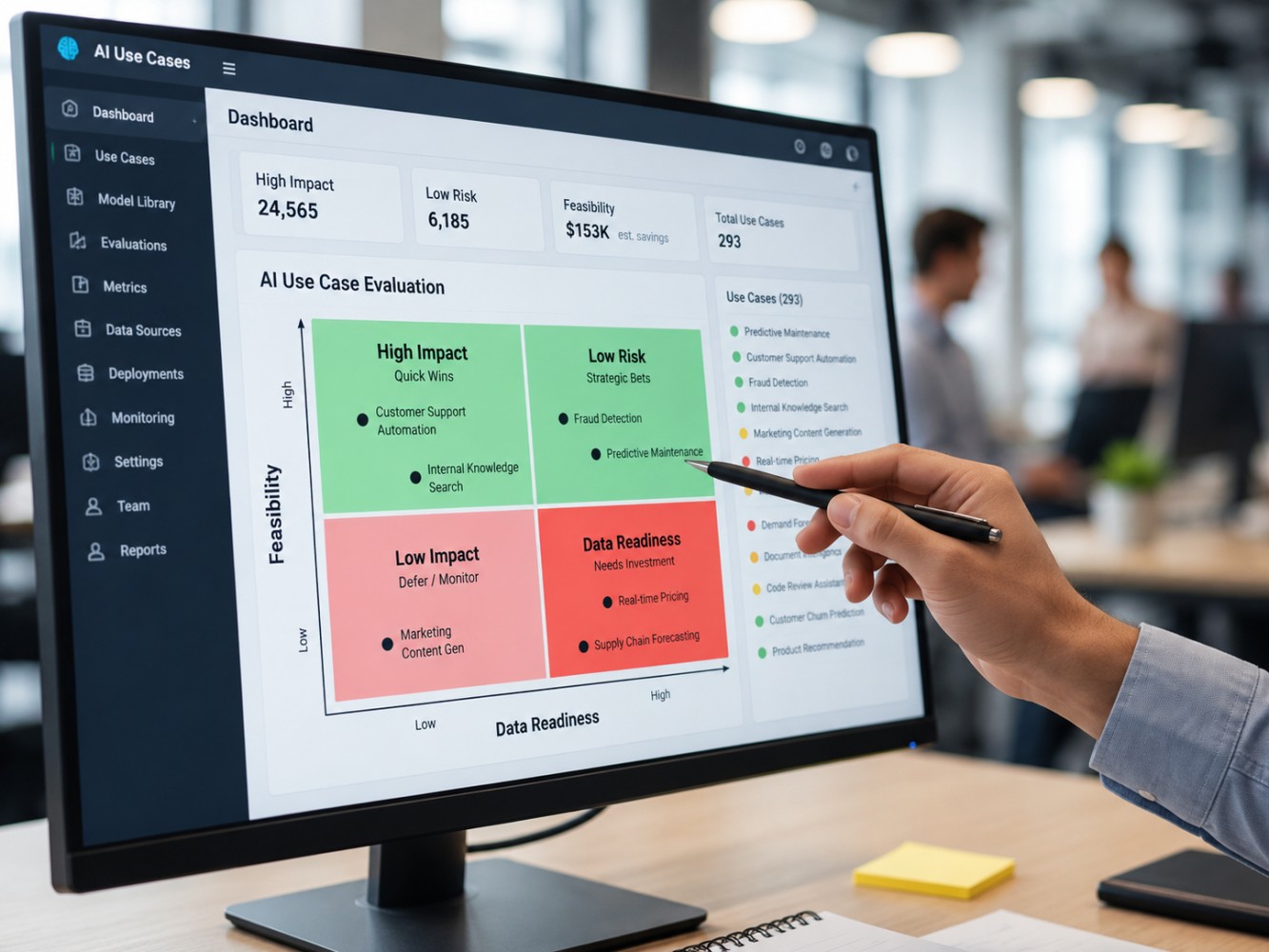
A first project has two jobs. It has to deliver a result people can measure, and it has to teach the organisation how to work with an agent: who reviews its output, how corrections flow back, which systems it may touch.
If the first process is too small, the result is invisible.
If it is too complex, the pilot spends months on integration and never reaches real cases.
The processes that get picked first are often the ones with the loudest sponsor or the most impressive demo.
Neither says much about whether an agent will pay back, which is what the five questions below are for.
Five questions for every candidate process
Take your list and ask these five questions of each case. A process that gets a clear yes on all five is a strong first candidate:
1. Does the work repeat often enough to matter?
A task that comes up a few times a month will not repay the setup effort. Look for work that arrives every day, ideally in volumes that grow faster than the team handling it.
2. Do people spend their time reading and re-typing?
Agents do their best work where the input arrives as documents, emails, scans or web pages and someone has to turn it into structured data before anything else can happen. If the input is already clean data in one system, classic rule-based automation may be all you need.
3. Can someone tell whether the result is right?
Choose a process with an output you can check: a classification, an extracted figure, a completed record, a draft that an expert accepts or rejects. Clear criteria make the pilot measurable, and they give reviewers a reason to trust the agent.
4. Do you know what the process costs today?
Turnaround time, hours per case, error rates and rework are enough. Without a baseline, nobody can say afterwards whether the pilot worked, so measure before you build.
5. Can an expert stay in the loop?
First projects go best where the agent prepares and a person decides. Each correction a reviewer makes becomes feedback the system can learn from, and the team sees the quality for themselves before any case runs without them.
Some processes look attractive and still make poor first projects. Be careful with a process that needs five systems integrated before the agent can do anything useful, one that rests on rare, high-stakes decisions with no agreed right answer, or one whose rules are being rewritten this quarter. They may be good second or third projects once the foundations are in place.
A worked example: transfer pricing benchmarking at WTS
Transfer pricing benchmarking at WTS Deutschland, a multinational tax and legal advisory firm, shows what a strong candidate looks like in practice.
Benchmarking studies were manual, time-intensive and costly. Analysts extracted and validated financial data from many public sources to find comparable companies. Different analysts could reach different results, which created audit risk, and a set of fragmented standalone tools limited how far the practice could scale.
Run it through the five questions and it passes each one. The work repeats with every study. Analysts spent much of their time reading public sources and pulling out financial data. Every comparable can be checked, because it is either accepted or rejected, and the final result has to hold up in an audit. The cost showed up in study turnaround. And the analyst stays in charge of the decision.
Together with our partner Evolvice GmbH , we built a cloud AI platform that automates benchmarking end to end. A web crawler collects data from public sources, and NLP and machine learning models extract and classify entities and filter them for relevance. A screening orchestrator drives the classifier, the crawler and a translator, with a planning copilot on top. Analysts work in an interactive dashboard that shows the AI-classified comparables, the arm's-length range and an accept/reject matrix, with dynamic thresholds and report generation. The platform is plugged into the WTS TP Technology stack, so analysts keep working where they already work.
Studies that took weeks now take hours. Deterministic AI validation reduces bias, and validation is 100% audit-defensible. The platform scales to high concurrent volume with 0 added headcount, and it is aligned with international transfer pricing guidelines and local regulations. The project received the Taxcellence Award 2024.
The part worth copying is the design of the analyst's role. The platform does the collecting, extracting and filtering, and the analyst reviews a prepared shortlist and accepts or rejects each comparable. Expert judgement stays where the firm needs it, and the time goes into the decisions themselves.
You can read more about this here: WTS case study
From the first process to the fifth: four steps
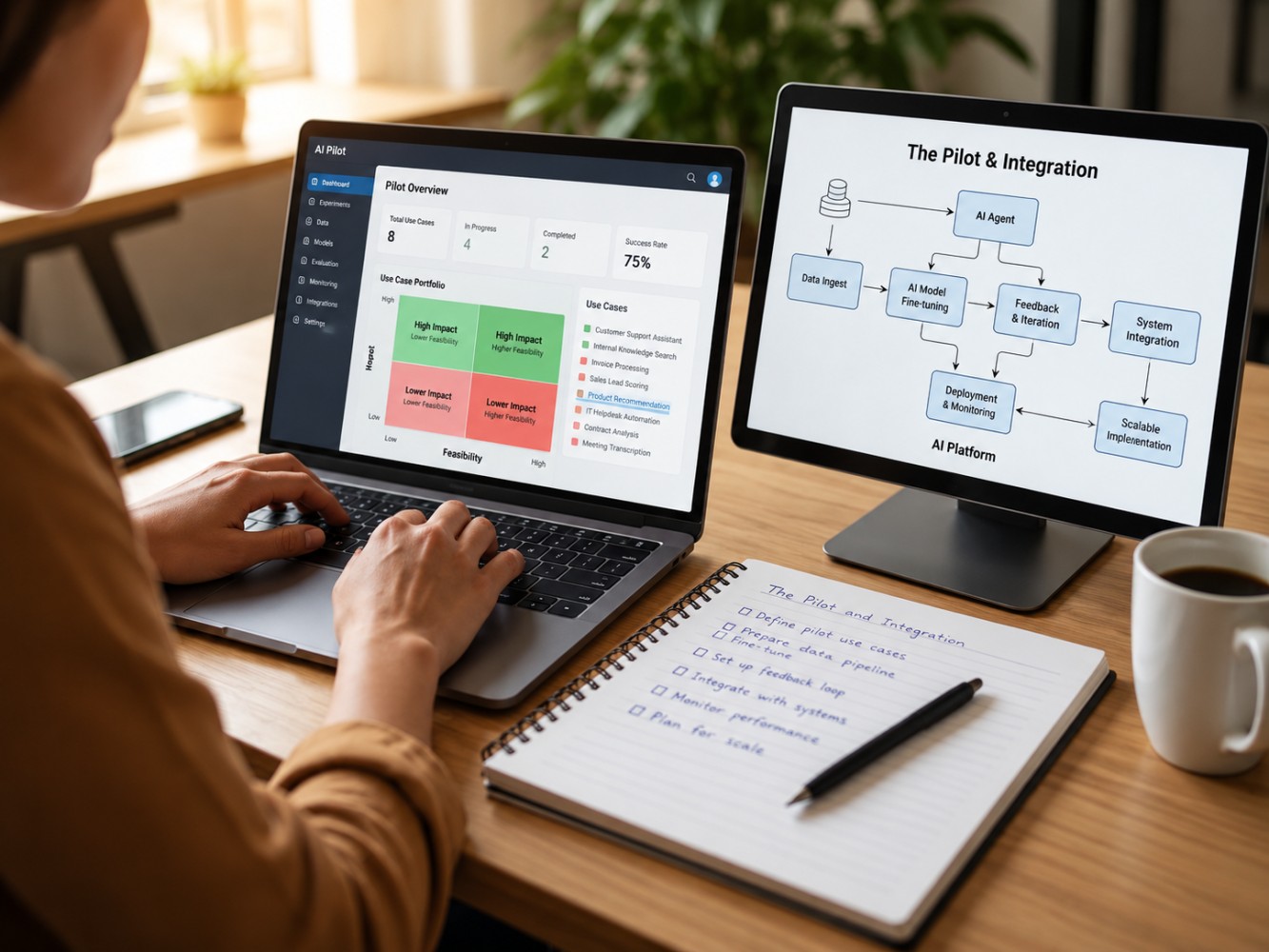
Choosing the process is the first of four steps we follow with clients.
Identify. We map the candidate processes against the five questions and estimate the return before anyone writes code. The ROI calculator on our service page gives you a first estimate for your own numbers.
Pilot. One agent goes live in your real systems within weeks, on real cases, with your reviewers checking its work. Its results are compared against the baseline you measured.
Integrate. The agent is connected to your ERP, CRM and knowledge sources so it can act on what it reads, for example by completing a record or preparing a decision, instead of handing data back to a person to copy across.
Scale. The next processes reuse the data foundation, the integrations and the review routines from the first one. That is why each project should be faster and cheaper than the last, and why the choice of the first process shapes the whole programme.
Before your next planning meeting
Pick three candidates from your list and score each against the five questions. Measure the current turnaround and hours per case for the strongest one over two weeks. Then decide who on the team would review the agent's work during a pilot. With those answers, you have most of what a first project needs.